Nepal
Nepal is one of the richest countries in the world in terms of biodiversity due to its geographical position and altitude variation. The elevation of the country ranges from 60m above sea level to the highest point on earth, Mt. Everest at 8,850m, resulting in sub-tropical to arctic conditions. This wide variation fosters an incredible variety of ecosystems. Here you will witness the greatest mountain range on earth, which has eight of the world’s 14 highest mountains, including Everest (8,850m), Kanchenjunga (8,598m), Lhotse (8,511m) and Annapurna (8,091m), to name a few.
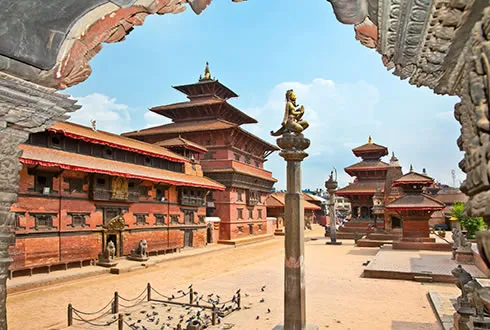
See thick tropical jungles teeming with a wealth of wildlife, thundering rivers and forested hills. Within this spectacular geography is a rich cultural landscape. The majority of the population is found in the Kathmandu Valley, located in the centre of Nepal and home to three major towns, Kathmandu, Patan and Bhaktapur.
Time - Nepal is 4¼ hours behind Australian EST
Language - Nepali is the official national language, however, English is widely spoken. The country has a mixture of over 40 ethnic groups and sub-groups who speak over 93 languages and dialects..
Entry Requirements - Passports must be valid for six months beyond the length of stay. Visas are required for Australian travellers, the price of which is already included in the fully inclusive price of all our group tours for Australian passport holders (providing all applications are received by Wendy Wu Tours within the required visa processing time frame).
Cities
KATHMANDU
Lying in the heart of the Kathmandu Valley, the capital of Nepal has remained a centre of trade, religion and politics since ancient times. Kathmandu is a treasure trove of mediaeval art, temples and religion.
CHITWAN NATIONAL PARK
The Chitwan region was declared a national park by the Royal family in 1973. This is one of the few remaining undisturbed vestiges of the Terai, a low altitude region located between the foothills of the Himalayas and the Indian border. This park holds one of the world’s last populations of the One-Horned Rhino and is also one of the last refuges of the Royal Bengal Tiger.
|