Sat in the waters of the Gulf of St Lawrence, Prince Edward Island (PEI) is
Canada’s smallest province, and one of the three Maritimes along with
Nova Scotia and New Brunswick. An island of rich, red earth and gently rolling farmland, this is Canada at its most pastoral, the lush pastures fringed with dunes, beaches, quaint lighthouses and red, sandstone cliffs where the land meets the shimmering waters of the Atlantic. Connected to the mainland by the 13-kilometre Confederation Bridge, venture here for plentiful outdoor exploration.
The ancestral home of the Mi’kmaq Nation, the French settled the island in the 1720s, naming it Ile-St-Jean. They were turfed out by the British in the 1760s and was renamed Prince Edward Island in the 1799. All these iterations of the land can be found in PEI’s vibrant culture today; you’ll be able to see, hear and taste the Indigenous, Acadian, Celtic and British influences wherever you explore. PEI is also hailed as the ‘birthplace of the Confederation’, as the host of the Charlottetown Conference in 1864, when leaders from PEI, Nova Scotia and New Brunswick gathered to discuss a Maritime union, out of which the Confederation of Canada grew.
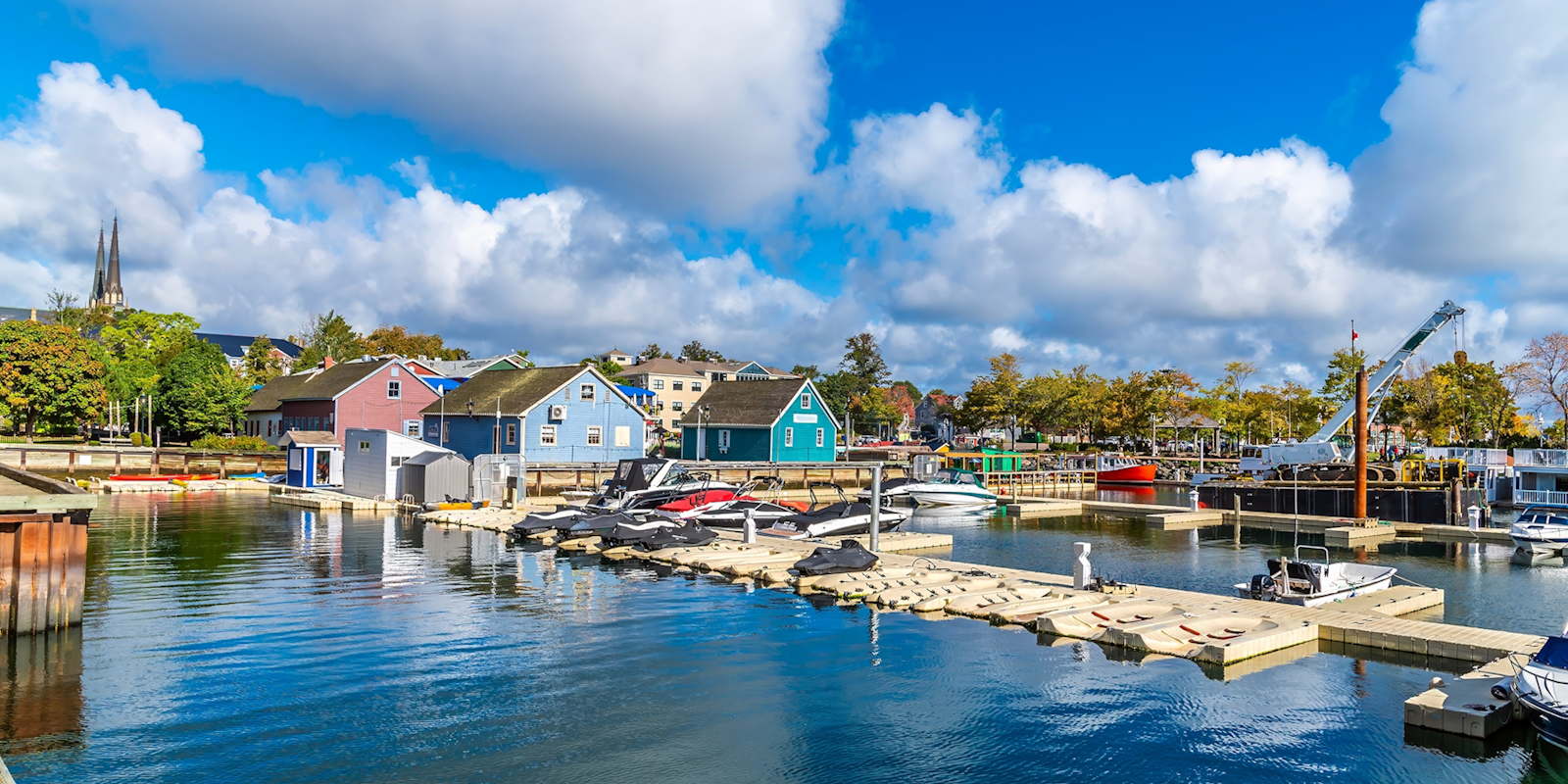
Called ‘Canada’s food island’, PEI does farm-to-table to perfection and is famous for shellfish, lobster and oyster, still sold fresh from fishing boats. It is an excellent place to taste modern Canadian cuisine, particularly in compact and walkable Charlottetown, the graceful provincial capital. It is not far from here that local author Lucy Maud Montgomery set her
Anne of Green Gables novels – there are several attractions in the area where you can discover more about this beloved Canadian character. Further afield is the tranquil Prince Edward Island National Park, encompassing lovely beaches and undulating sand dunes, particularly idyllic in the sunny summer months for walking, relaxing and swimming in the calm waters.